 SFF Studio
The #1 AI Agent Platform for HR
Voice agents that talk to your employees at the moments that matter: onboarding, reviews, exits.
TRUSTED BY:









You'll be talking with an AI assistant. The conversation is transcribed; the audio is not recorded. How your data is handled
Make hearing your people your competitive advantage.
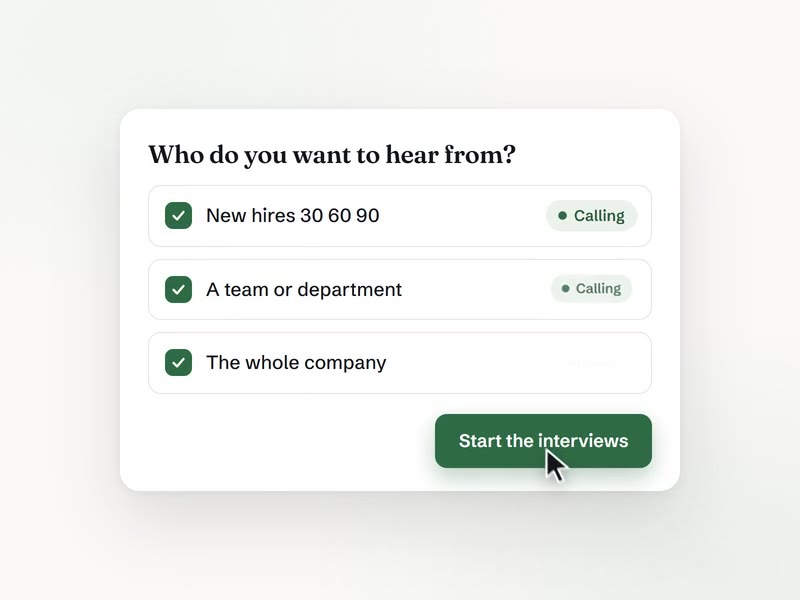
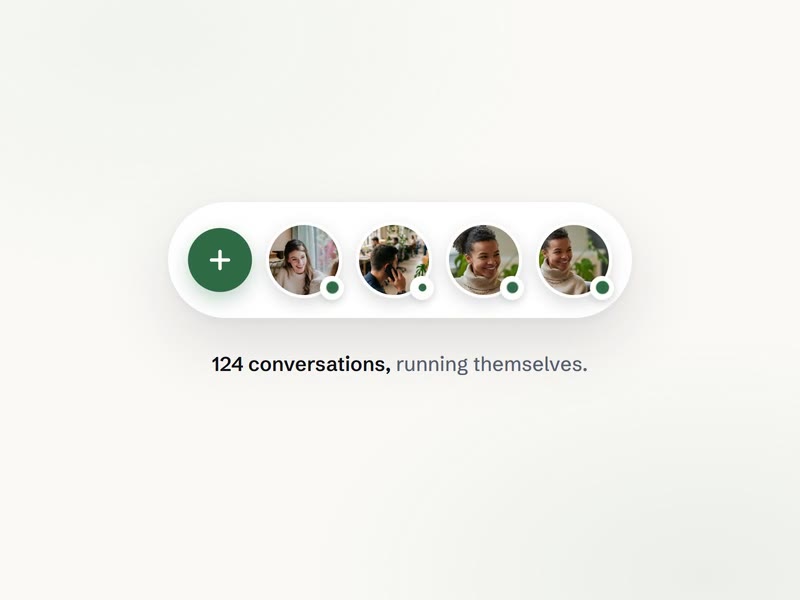
Cohorts build themselves from your HR system. Five minutes, no integration.
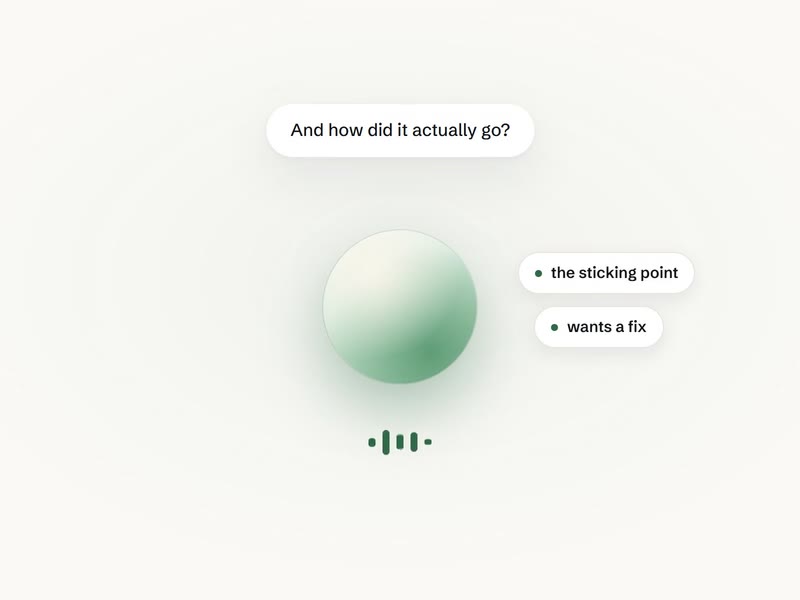
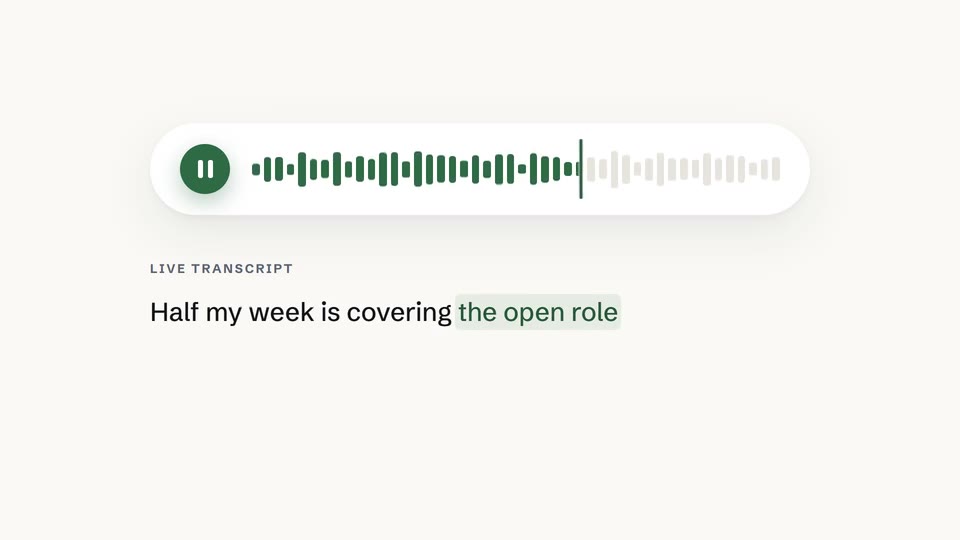
It speaks, listens, and takes notes on every answer.
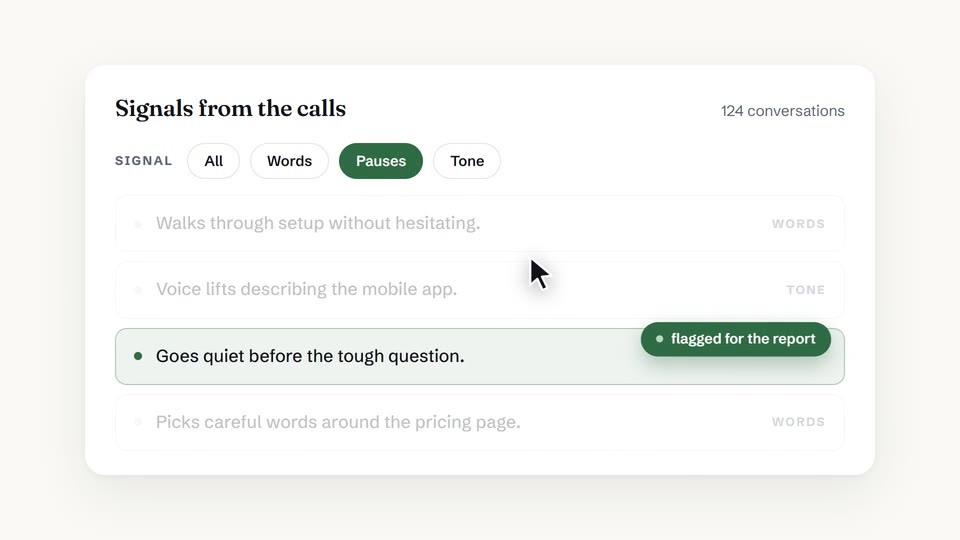
Pauses, hesitation and tone get coded like words do.
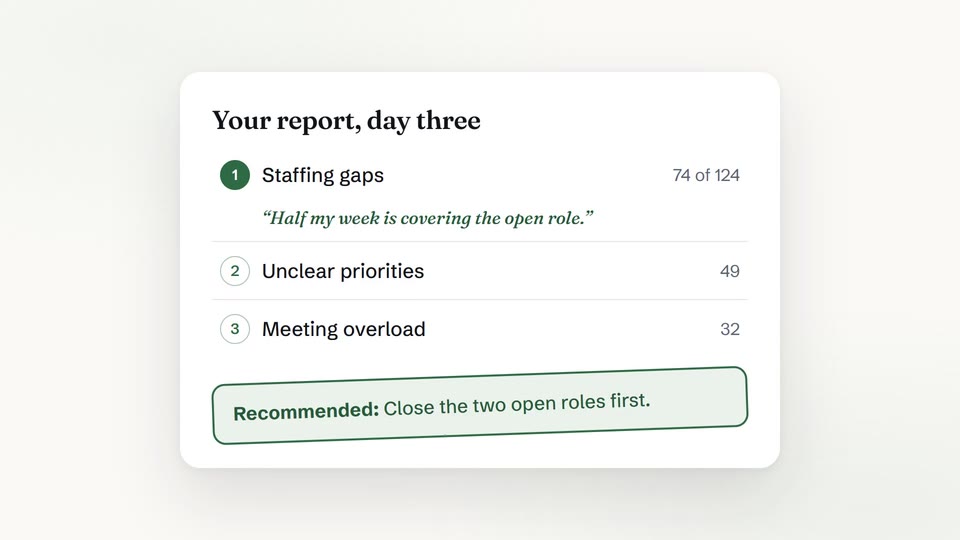
Ranked reasons, real quotes, and a recommendation, in three days.
Every conversation compounds into one answer you can act on.
Wherever your people are. Whatever your stack.
 WhatsAppIn-appEmail inviteSMSWeb link
 HubSpotSalesforce
 Intercom
 Zendesk
 Stripe
 Zapier
Replace engagement surveys with real conversations.
This is what you get.
A live view of every conversation, and what to do about it.
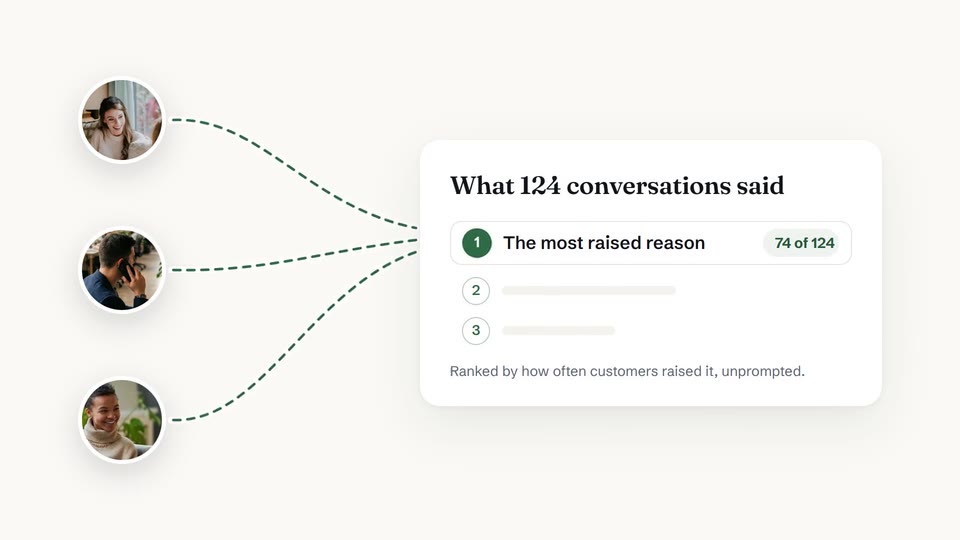
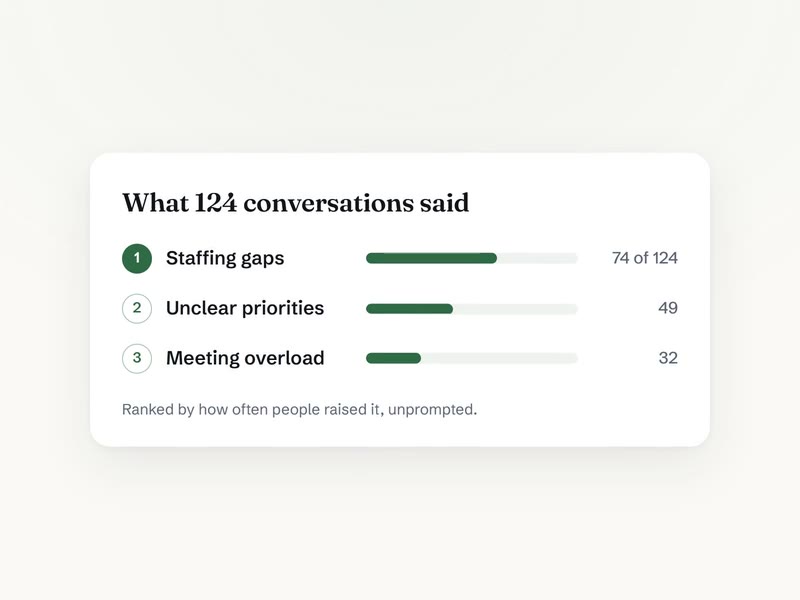
What 124 conversations said
124 conversations, three days, one report. Ranked by how often employees raised it, unprompted.
"We lost Dana in March and her accounts just landed on us. Nobody asked, they just showed up in my queue."Interview 18, minute 03
"In January the goal was enterprise customers. In March it was the new product. My team just kept doing both."Interview 96, minute 06
 Selin K.Quarterly check-inStaffing gaps5:12
 Marek J.New joiner, month threeMeeting overload4:47
 Ida B.Post-review follow-upUnclear priorities6:03
 Theo W.Quarterly check-inStaffing gaps5:38
 Priya N.Pulse score follow-upPay transparency4:21
Insight
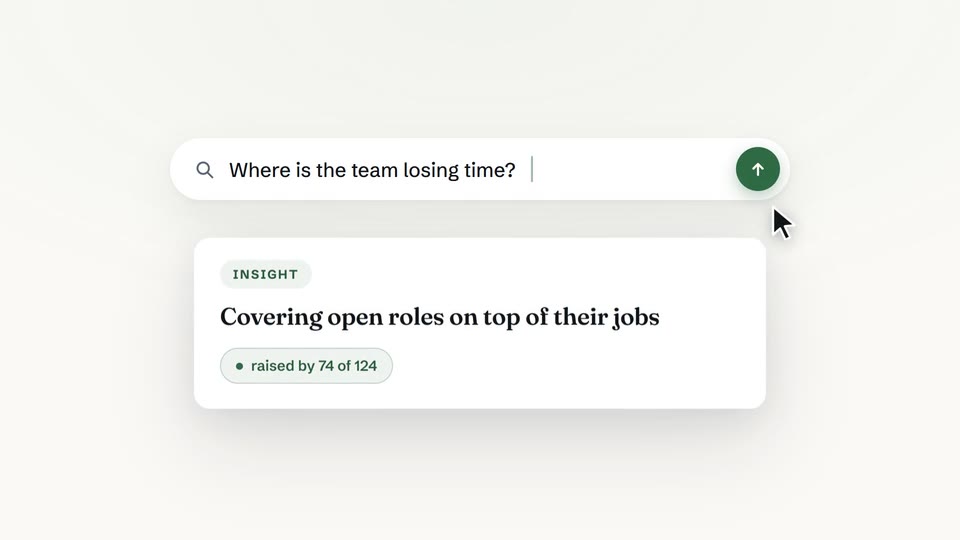
Most workload complaints come from just two teams, support and onboarding. The other teams are fine.
Insight
Priority changes reach employees weeks late, usually through a slide or a rumor. They want to hear changes directly, when they happen.
Signal
People paused longest before the pay questions. Several asked first whether their manager would read their answers.
Quote
"My calendar is full of meetings about work I never get time to do."
Frequently asked questions
What is employee listening?
Employee listening is a structured way to hear what employees experience at work, in their own words. Underheard turns those conversations into ranked themes so HR leaders can see what needs attention first.
How is this different from an engagement survey?
An engagement survey records a score and a fixed answer. Underheard follows up in conversation, so employees can explain the workload, manager communication, career, or policy issue behind the score.
Are employee conversations anonymous?
Employees can speak without their responses being presented as a manager-level performance record. Reports group recurring themes and remove the need to expose an individual employee's answer when discussing patterns.
Will managers see individual conversations?
Access is set around the listening program. HR can keep raw conversations restricted and share the ranked findings, approved quotes, and recommended actions with leaders who need to act.
Which channels can employees use?
Employees can be invited through Web, Phone, WhatsApp, In-app, Email, and SMS. Choose the channel that fits the workforce, whether people work at desks, in the field, or across shifts.
When should HR run employee conversations?
Run them after meaningful moments such as onboarding, a reorganisation, a benefits change, a performance cycle, or a quarterly check-in. A regular cadence also shows whether a concern is improving or repeating.
Can Underheard work with our HRIS?
Yes. HRIS data can define the employee group, timing, and context for a conversation, such as new joiners or a specific location. The report stays focused on the themes employees raise.
Does Underheard integrate with Slack, Teams, or custom systems?
Yes. Underheard supports HRIS, Slack, Teams, and custom integrations so invitations and findings can fit the systems your HR team already uses.
What does an HR team receive?
HR receives a live view of conversations, a ranked report of repeated themes, supporting quotes, and clear actions. That makes it easier to move from an engagement signal to an accountable response.
Can this replace every HR survey?
It can replace broad engagement-survey follow-ups where a score alone does not explain the problem. Teams can also use it alongside pulse surveys, exit interviews, and other existing listening programs.