
UnderHeard report
Finding 01The phone line
Patients cannot get through to book or ask.
For clinics and practices
UnderHeard talks to patients after their visit and turns every conversation into one ranked report.


UnderHeard report
Finding 01Patients cannot get through to book or ask.
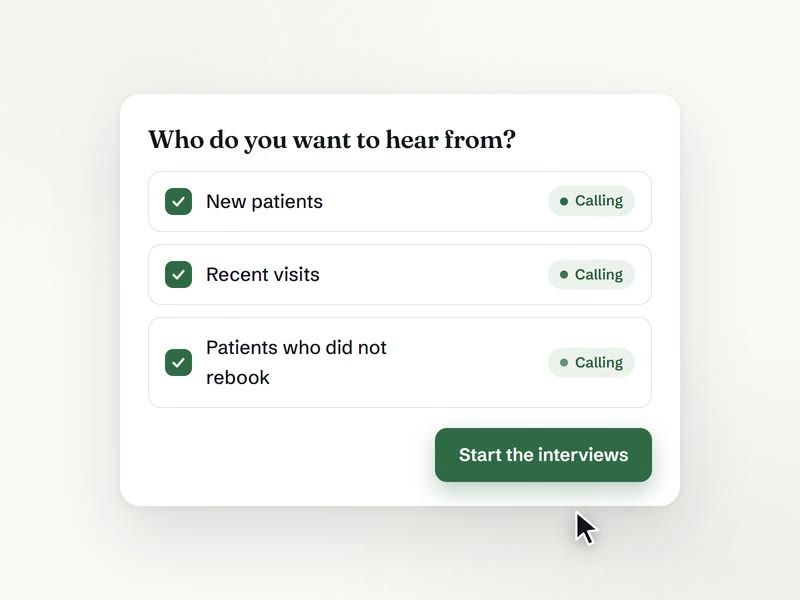
Cohorts build themselves from your practice system. Five minutes, no integration.
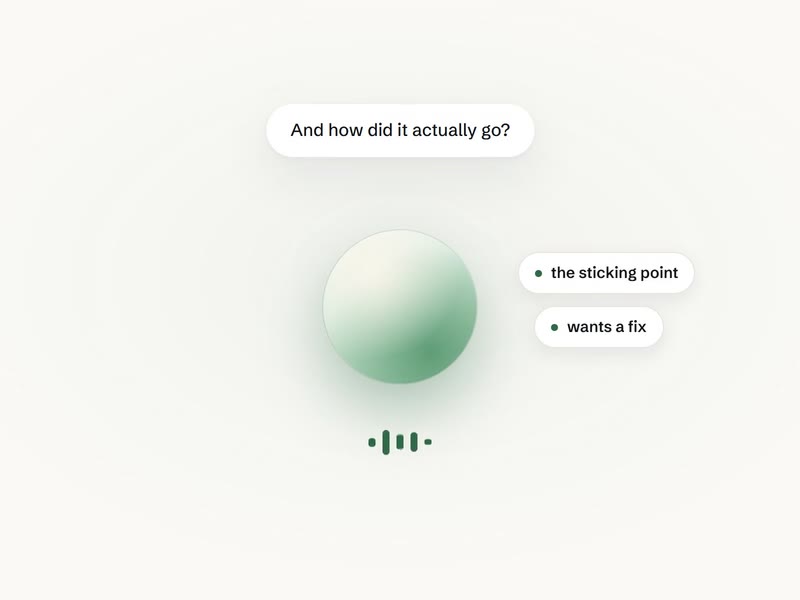
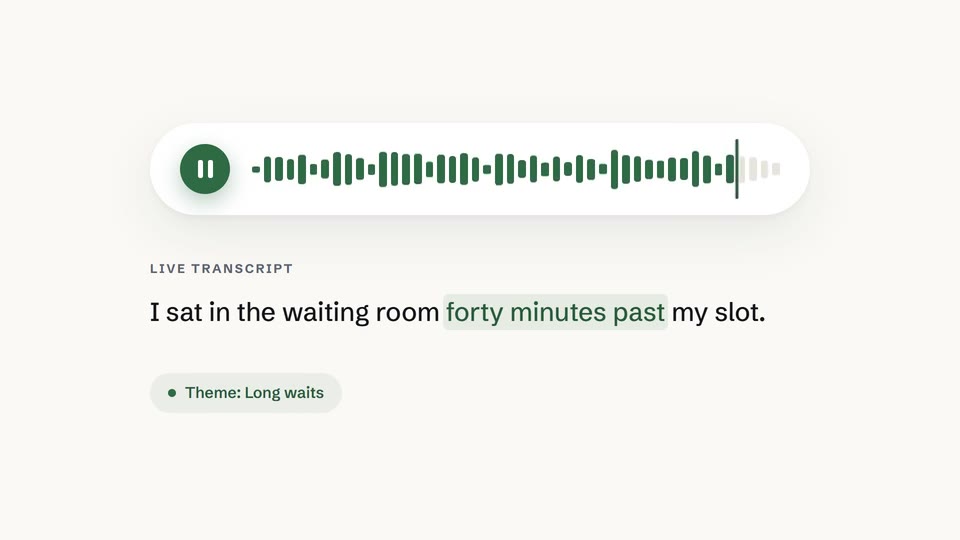
It speaks, listens, and takes notes on every answer.
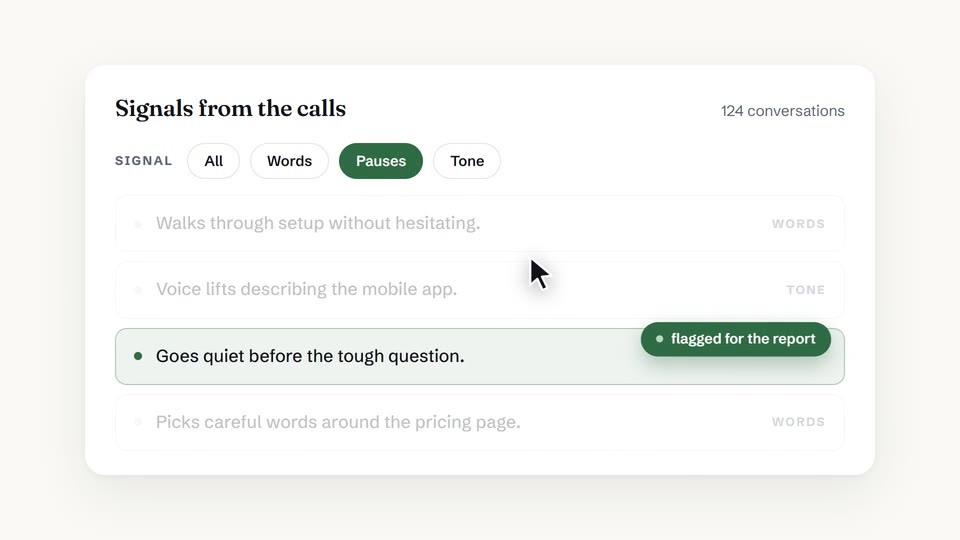
Pauses, hesitation and tone get coded like words do.
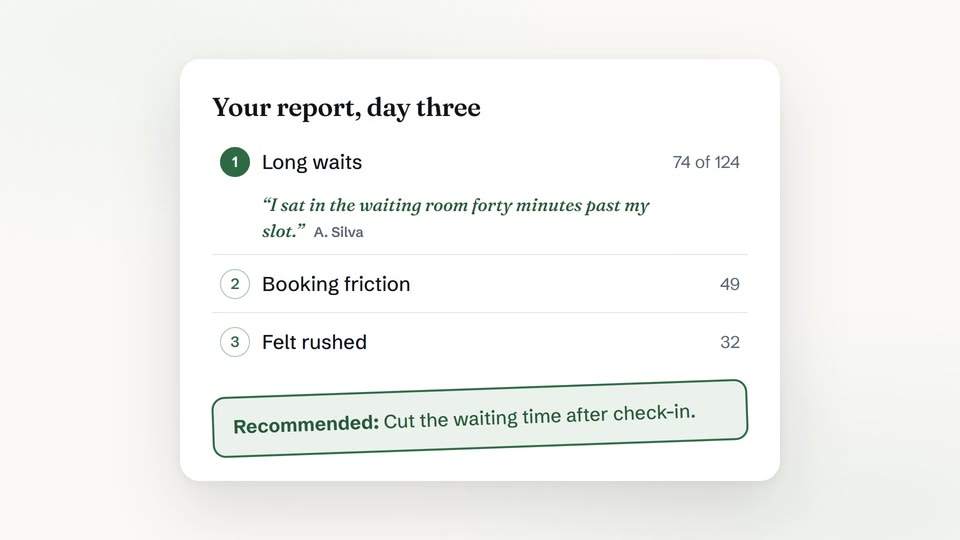
Ranked reasons, real quotes, and a recommendation, in three days.
Every conversation compounds into one answer you can act on.


A live view of every conversation, and what to do about it.
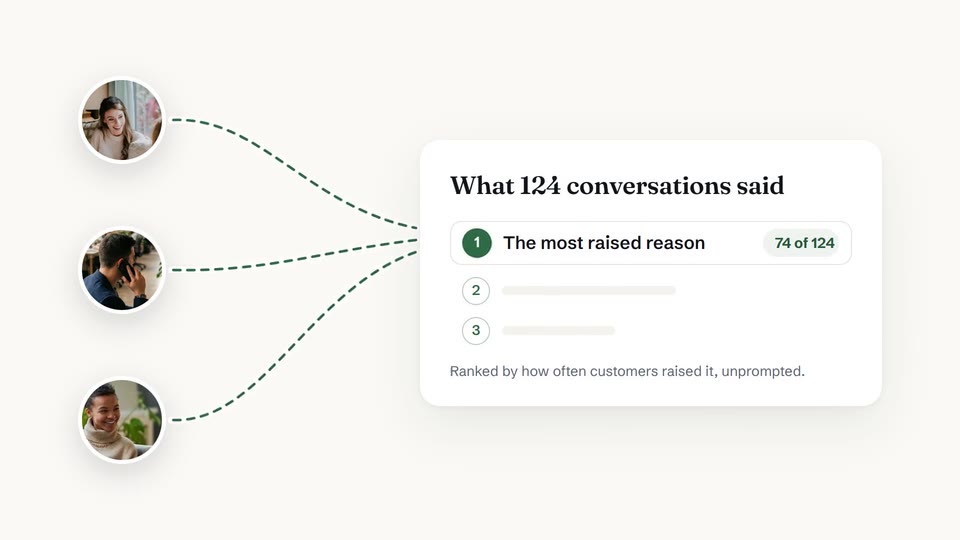
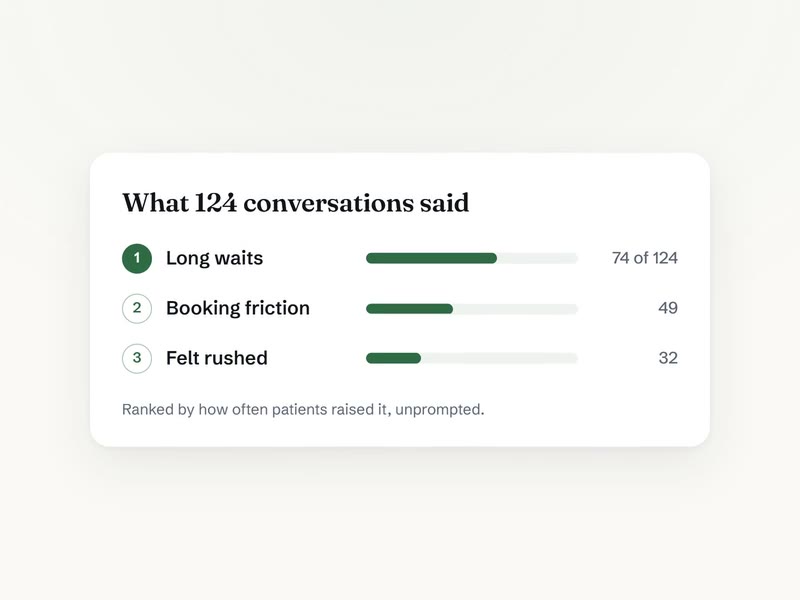
What 124 conversations said
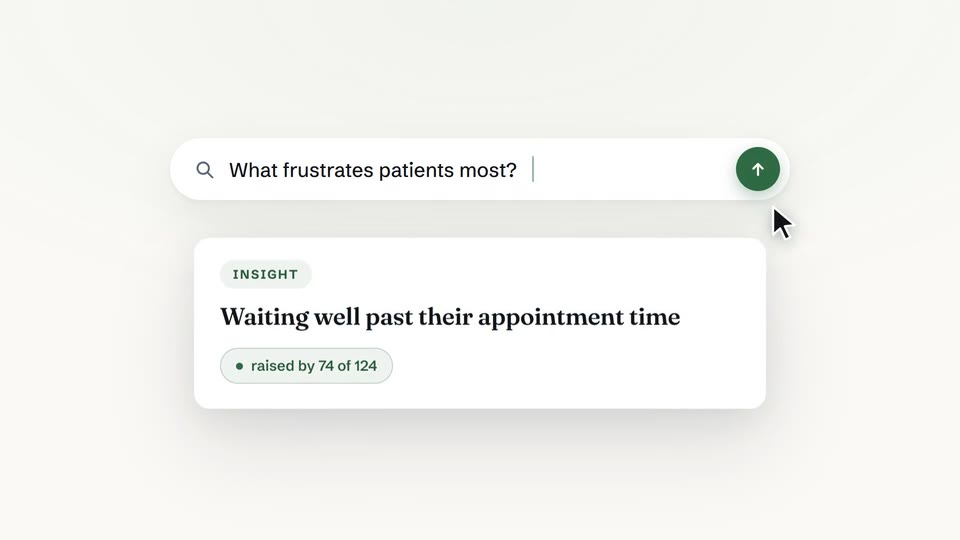
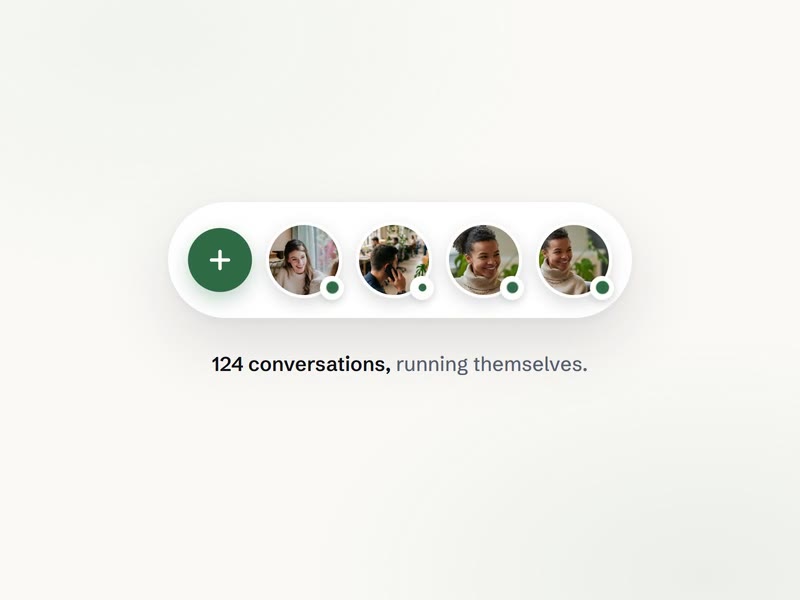
124 conversations, three days, one report. Ranked by how often patients raised it, unprompted.
"I tried all Tuesday morning to move one appointment. In the end my daughter drove past and asked at the desk."Interview 41, minute 02
"Fifty minutes in the waiting room, seven with the doctor. I remembered my questions in the car."Interview 88, minute 04
Greta M.Visit last weekThe phone line5:12
Anton R.Regular patientThe phone line4:47
Leyla S.First visitWaiting times6:03
Mats B.Post-treatment follow-upFeeling rushed5:38
Alba K.Did not rebookBilling surprises4:21Insight
Most phone complaints are about the mornings. Patients who call after two get through.
Insight
Hardly anyone complained about the treatment itself. The complaints are about the organisation around it.
Signal
Patients talk openly on the phone. Several said they would never mention any of this at the front desk.
Quote
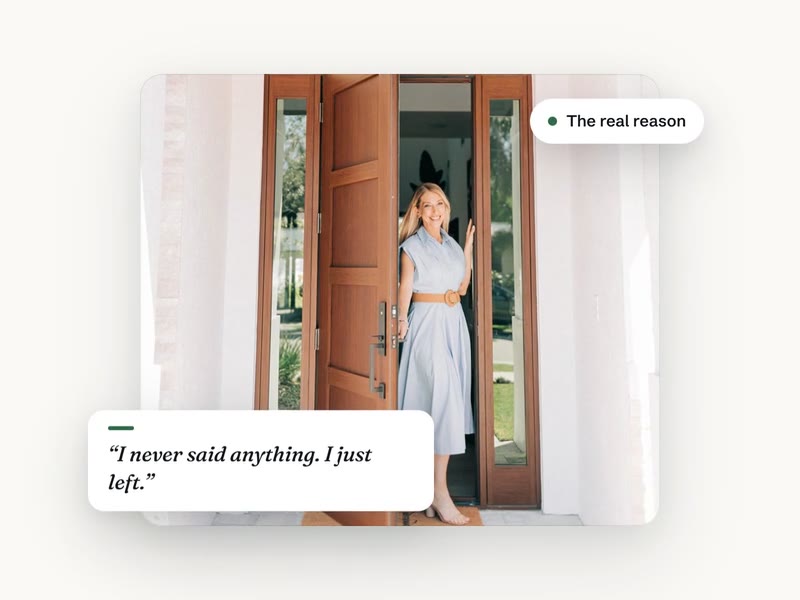
"I like my doctor. I just can't reach the practice."

It is a conversation with patients after an appointment about the experience around their care, such as booking, waiting, communication, and follow-up. The result is a ranked view of what patients raise most often.
UnderHeard captures the details that a patient may not raise at the front desk, then groups repeated issues into clear themes. Clinics can improve the practical parts of care, from phone access to appointment flow.
Patients can be invited through Web, Phone, WhatsApp, In-app, Email, and SMS. A clinic can use the channel that is appropriate for its patient journey and consent process.
Yes. UnderHeard provides HIPAA-compliant deployments and GDPR-compliant deployments. A BAA is completed before PHI is processed when required. Every deployment includes access controls, documented data flows, and retention settings.
Patient information is handled through role-based access controls, defined data flows, and retention settings. Clinics can limit access to raw conversations while sharing the aggregate findings needed to improve service.
Yes. The conversation can focus on the patient experience around care, including access, waiting, communication, and follow-up. It does not need to ask for diagnosis, treatment, or other clinical details.
Yes. Reports present themes without exposing individual responses to frontline teams. Raw conversations remain restricted to the people responsible for the feedback program.
Clinic leaders and approved operational teams see the ranked themes, supporting quotes, and recommended actions. Permissions can keep raw conversations available only to authorised users.
Each clinic receives a live view of feedback and a report that ranks repeated patient-experience themes. It gives operations teams a clear starting point for improving the visit before the next patient arrives.
Invite patients after the visit, when the booking process, waiting time, staff communication, and follow-up are still clear. The same approach can also be used after a specific service or change in patient operations.